 |
|
Four photographs of the lynching of an unidentified
African
American male in a coastal Georgia swamp, 1902
|
The collection of lynching
photographs compiled by James Allen on the “Without Sanctuary” website is not
only disturbing as a set of images, but a stark and brutal reminder of an
incontrovertible moral corruption in our nation’s recent history. Some images
show a single body, dangling at the end of a noose, with no living bodies in
sight while others are filled with onlookers eager to get a glimpse at the
hanging victims. It is unclear which scene is more unsettling: the corpse left
to rot silhouetted against a scenic pastoral landscape or a crowd of white men
gathered around a tree to witness death much in the same way they are
captivated by fly balls and home runs. Was this just a game to them? Both
scenarios are graphic and horrific but it is the utter fascination that the
spectators of this terrible crime seem to share is the most unnerving. Crowded
around a tree where the victims have been killed, the people in the mob are not
excused from their participation in this event; their presence serves to
support the lynching and even in such high profile cases as some that have been
documented through these postcards, no bystander is innocent. Perhaps even more
upsetting, many of these images were taken by professional photographers, their
names and studios etched into the negatives with dates and locations and
sometimes even with personal notes about the event or the selected audience.
Clearly, there was a market for these types of photographs or else they would
not have been taken; the contemporaneous trend of labeling photography as a
documentary medium discounts the fact that photographers were looking to make a
living and sell what they could capture, even stooping so low as profiting from
these lynching photographs as postcard images.
 |
Confederate dead gathered for burial after battle,
photograph by Alexander Gardner |
Comparing
these post-war lynching photographs to the thousands that were taken by the now
famous photographers of the Civil War, the fascination with death and corpses
is consistent, but the surrounding context can not be avoided. The bodies
laying horizontal on the battlefield are stoic in what may become their final
resting place and as such, they become depersonalized; one can not discern how
they were killed, what side they fought for, or even who they are. The
photographers sent to capture scenes from the war were doing so in order to
place the war on every front page newspaper and shock the American public by
appealing to their moral hierarchy. Photography was a way to preserve memories,
however skewed, for a nation that was falling apart at the seems and which have
lasted through the past century. In the way the Civil War photographs are
passive representations of a massive death toll, the lynching photographs are
personal and intrusive attacks against the victims they portray and
exploitative of their “shock value” as sellable items. Some of the identities
of the hanging bodies are know as are their crimes or reason for death and they
become activated in the scene both by the presence and absence of bystanders;
the fact that such a photograph was even taken of the event attests to the fact
that lynchings were grossly popular in the post-war period. When considering these
postcards, the persecutor of the lynching may not be directly pictured but is nonetheless
universally known: white men in search of an unattainable vengeance against
non-white outsiders. While the photographs from the Civil War aim to portray
the horrific aftermath of war for the wider public, the lynching photographs
represent a perversion of the human consciousness and an unnatural fascination
with images of the dead. And even more vital to this distorted narrative, both
sets of photographs were taken by professionals, which ultimately poses the
question: which were more important to remember, the Dead at Antietam or the “Unidentified corpse of an African American male?”
 Gardner's and Brady's photographs of the Civil War aimed to report wartime realities to northern families. Many of the photos idealized the war, showing photos of soldiers prepping or hanging out at camp. Even the photos of dead bodies left on the battlefield were idealized. Often the photographers would move the bodies to get better photos. The death showed in these civil war photos was static, void of action and the actors inflicting this death and violence. By only presenting the end product, death, to the view, they can come up with any narrative in their head on how that soldier died, allowing them to project what ever death story they please. The question remains, how much of this is deliberate and how much is because of technology limitations of the time which forced all subjects in the photo to be still for a significant amount of time. Even this idealized version of the war portrayed in Gardner's and Brady's photographs were not well received in the North. These photos of death shocked people from the north and the military even took effort to limit their exposure.
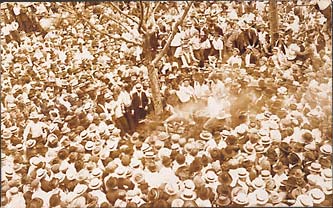 In sharp contrast, the lynching photographs are more violent, yet better received than the Gardner's and Brady's photos. James Allen's collection of postcards depicts the lynching of Black Americans in the south as theatrical event. In many of the photos, the act of lynching involves the gathering of families with even children present. These murders are seen as justice by the communities they exist in taking Black “villains” from the jail, often aided by the police themselves, and holding mock trials that ended in lynchings. The fact they the images were made into postcards speaks to how these were not seen as offensive or violent images, but something so normalized it could be place on a post card. Although they were not taken to capture violence, they are inherently more violent than the civil war photos. In most of the lynching photos the actors who inflicted the violence are present in the shot. Additionally, although the action of violence was not included in the photo, it leaves no mystery in how these Black Men died. Both the lynching and the civil war photos are extremely violent by nature, however they are interpreted differently based on the context in which they exist.
